Personal Project
28 July 2025

Overview
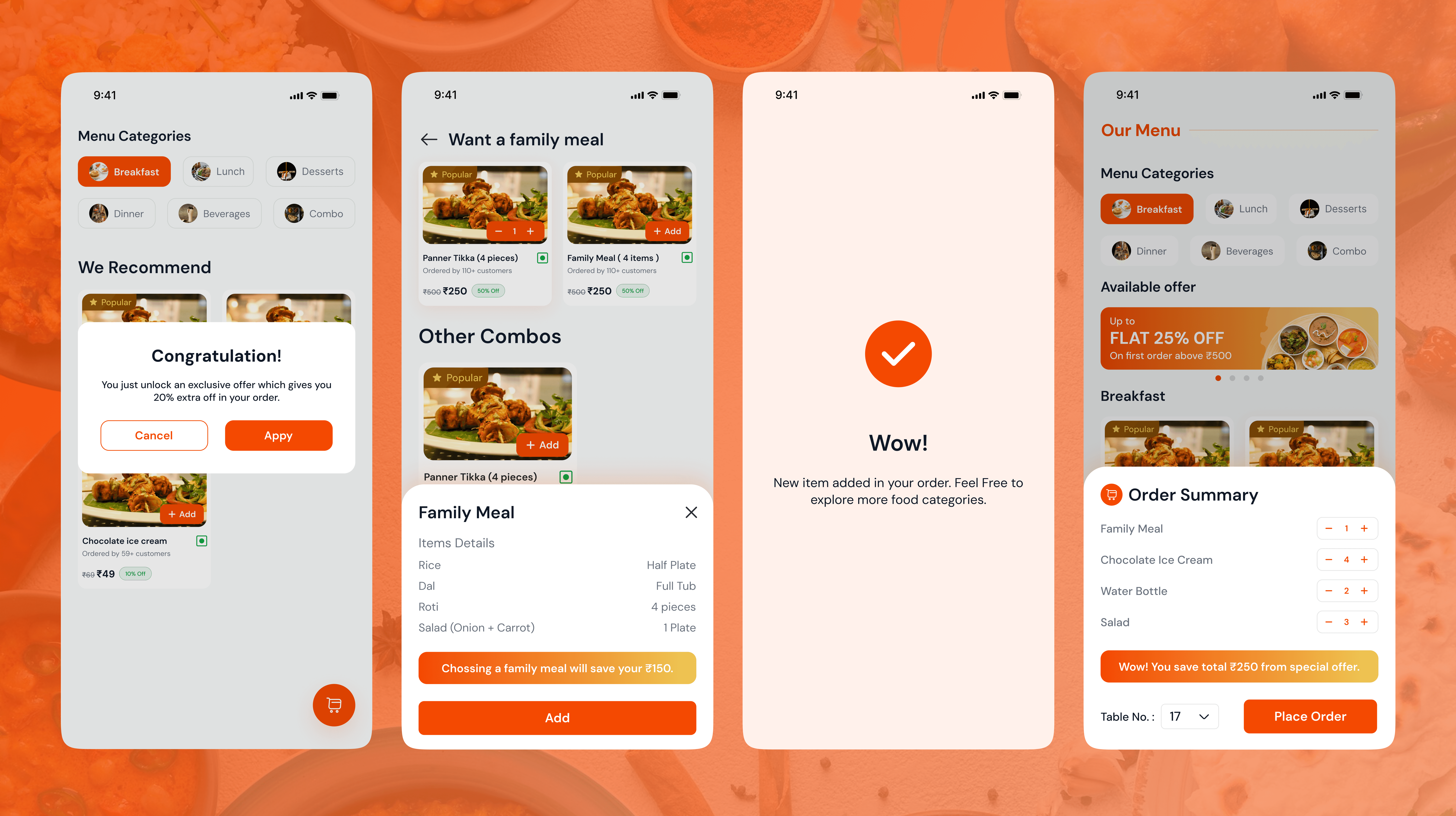
The Food Menu UX Project was designed to leverage buyer psychology and user experience (UX) principles to help restaurants increase sales through smarter digital ordering. Instead of traditional paper menus, diners can scan a QR code at their table to instantly access an interactive menu on their devices. This allows multiple people at the same table to browse and order simultaneously—making the dining process faster, more engaging, and more profitable for the restaurant. Inspired by strategies used by industry leaders like McDonald’s with self-ordering terminals, this system applies behavioral design and psychological cues to subtly guide customers toward higher-value purchases and additional items.
How We Increased Sales Using UX Psychology
Traditional menus and manual ordering slow down decision-making, limit upsells, and make it hard to personalize recommendations. Restaurants needed a scalable way to: 1. Increase average order value without aggressive sales tactics 2. Reduce friction and wait times during peak hours 3. Encourage add-ons (drinks, sides, desserts) at the right moments 4. Learn from customer behavior to improve the menu over time

Solution
A mobile-first QR menu that supports simultaneous scanning and ordering at the same table, designed with proven behavioral principles: 1. Branded splash → builds trust and primes a premium experience 2. Clear top navigation for categories → lowers cognitive load 3. Price anchoring (high-to-low listing) → makes mid-tier items feel more affordable 4. Combo upsells on item select → easy path to higher-value choices 5. Gamified rewards (“You unlocked a discount!”) → positive reinforcement 6. Timely cross-sells (drinks, water) and end-of-flow dessert nudge 7. Goal-threshold offers (e.g., “20% off on minimum order ₹500”) → motivates one more item 8. Delightful feedback screens → close the loop and encourage repeat behavior